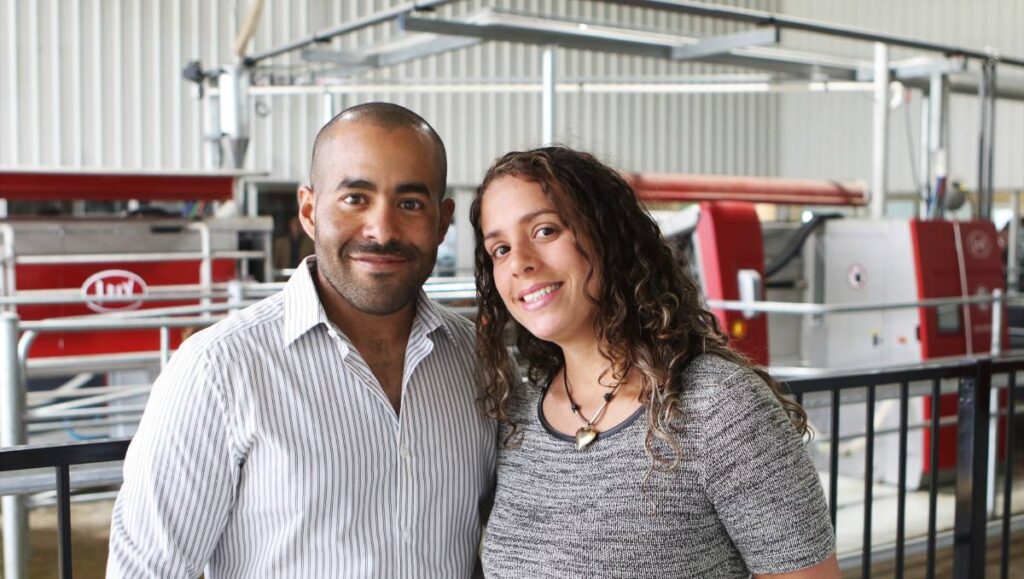
news, local-news, The bangs and clatters of state-of-the-art milking robots, the gentle moo of happy cows and shelves already beginning to groan with the weight of 300 kilograms of freshly made cheese – welcome to Smithton’s newest cheese factory. When Genaro Velasquez and Rosselyn Escalante first tried making cheese at home a few years ago, they had no idea they would eventually take on a cutting-edge project in the heart of Tasmania’s prime dairy region. In fact, the Venezuelan couple admitted on Thursday, their first attempts at the ancient art were not particularly appealing. “We had some real funky looking cheeses, and we thought, this can’t be right,” Mr Velasquez said. Undeterred, the couple managed to take themselves through a cheese course in New Zealand and eventually became good enough to consider starting a business. “We were just planning to use a couple of shipping containers, and then make cheese for the South American community here,” Mr Velasquez admitted, speaking after the official opening of La Cantara Artisan Cheese, a new factory attached to Agritas’ Duck River Meadows Dairy project. “But now we’re here.” One of the biggest challenges for the couple was creating cheese that had the complex flavours of the cheese they grew up with in South America. “Here we have to pasteurise the milk first,” Ms Escalante admitted. “It doesn’t have the cultures in it like in South America … but we did it. It took some work, but we worked it out.” Mr Velasquez said the process of cheesemaking was compex, and required a high attention to detail. To enter the cheese room, the cheese master takes a shower, and then dresses in special cheesemaking clothing. Every time. “We’re very close, we have to get microbial testing done, and then when we get ten consecutive batches that pass we can sell commercially,” he said. “We’ve made about 300 kilograms so far since Thursday … about 50 kilograms a day.” The couple will eventually sell their cheeses at a cafe and heritage centre, but in the meantime have launched their own website and will offer local pick up. Visit the website at www.lacantara.com.au Why not pick up a subscription to The Advocate? Sign up here/images/transform/v1/crop/frm/jU9weEXQxcXxwRCjU8nuGc/a984794a-3452-4a74-8b1f-0d35fc6435b0.JPG/r0_248_5472_3340_w1200_h678_fmax.jpgJanuary 28 2021 – 6:00PM Smithton cheese factory officially opens alongside Agritas’ Duck River Meadows robotic dairy project The bangs and clatters of state-of-the-art milking robots, the gentle moo of happy cows and shelves already beginning to groan with the weight of 300 kilograms of freshly made cheese – welcome to Smithton’s newest cheese factory.When Genaro Velasquez and Rosselyn Escalante first tried making cheese at home a few years ago, they had no idea they would eventually take on a cutting-edge project in the heart of Tasmania’s prime dairy region.In fact, the Venezuelan couple admitted on Thursday, their first attempts at the ancient art were not particularly appealing. Semi-hard cheeses mature in the store room before receiving a paprika rind. Picture: Meg Powell”We had some real funky looking cheeses, and we thought, this can’t be right,” Mr Velasquez said.Undeterred, the couple managed to take themselves through a cheese course in New Zealand and eventually became good enough to consider starting a business.”We were just planning to use a couple of shipping containers, and then make cheese for the South American community here,” Mr Velasquez admitted, speaking after the official opening of La Cantara Artisan Cheese, a new factory attached to Agritas’ Duck River Meadows Dairy project.”But now we’re here.”One of the biggest challenges for the couple was creating cheese that had the complex flavours of the cheese they grew up with in South America. A dreamy cow slowly wanders into the automatic milking machine. Picture: Meg Powell”Here we have to pasteurise the milk first,” Ms Escalante admitted.”It doesn’t have the cultures in it like in South America … but we did it. It took some work, but we worked it out.”Mr Velasquez said the process of cheesemaking was compex, and required a high attention to detail. To enter the cheese room, the cheese master takes a shower, and then dresses in special cheesemaking clothing. Every time.”We’re very close, we have to get microbial testing done, and then when we get ten consecutive batches that pass we can sell commercially,” he said.”We’ve made about 300 kilograms so far since Thursday … about 50 kilograms a day.”The couple will eventually sell their cheeses at a cafe and heritage centre, but in the meantime have launched their own website and will offer local pick up.Visit the website at www.lacantara.com.auWhy not pick up a subscription to The Advocate?


More Stories
15 Vegan Cheese Brands Doing Dairy Better Than Dairy
Macaroni & Cheese For 100 Recipe | CDKitchen.com
Danish Startup Leverages Dairy Industry Know-How To Make Realistic Vegan Cheese