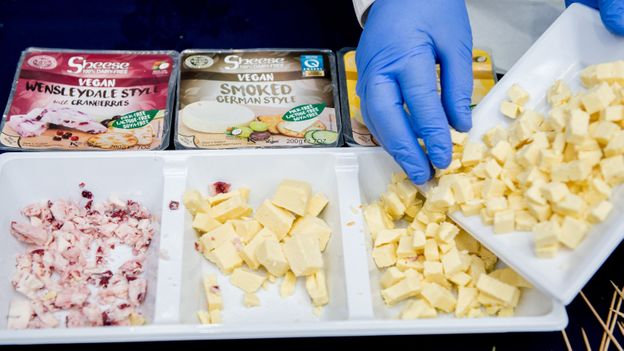
“But you want to eat oil-based products sparingly,” says Adkins. A recent study into the nutritional profiles of 245 different non-dairy cheeses found that 60% contained high levels of saturated fat, while most contained little protein. Just 15% of those studied had low levels of salt. To make vegan cheese slightly more nutritious, Adkins predicts that fortifying them with vitamins such as B12, which is found in dairy milk, will be a focus for vegan cheesemakers in the near future. MozzaRisella, a company producing vegan mozzarella, uses coconut oil alongside sprouted brown rice, which is pressed and mixed with water and apple vinegar. Making vegan cheese this way isn’t as complicated as it might sound, says Mauro Vendramin, the company’s UK sales manager – despite its first prototype turning out blue. This was 10 years ago, when vegan food wasn’t as popular or accessible. In fact, “vegan” was still a “bad word”, Vendramin says, and vegan cheese was mostly sought after by people who were intolerant to lactose, which is found in dairy cheese. Now, thanks to more people cutting down on their meat and dairy intake, Vendramin says flexitarians make up a large and expanding portion of its customer base. But coconut oil brings its own ethical issues, as coconuts are often grown in areas of extreme poverty, mostly in Indonesia and the Philippines. For example, research by the British not-for-profit organisation Ethical Consumer on the ethics of 19 vegan cheese companies found that only one of the vegan cheese company they looked at uses Fairtrade coconut oil, says Ruth Strange, a writer and researcher at Ethical Consumer. “The other companies aren’t really talking about how they’re sourcing it,” she says. On the plus side, most companies in the industry are producing their own vegan cheeses – rather than outsourcing the production to a factory elsewhere – which helps to minimise ethical issues that are sometimes found with companies who have long supply chains, such as low wages and dangerous working conditions, Strange says. Alongside the vegan cheese companies capitalising on the rise of flexitarians, numerous companies are working to bring cell-based cream cheese to supermarket shelves. US company Perfect Day, for example, has figured out how to make animal-product-free protein that is structurally identical to the protein in cow’s milk, without involving animals. The process involves “microflora” – microorganisms such as yeast cells or bacteria, it’s not clear which in this case – that have been genetically engineered to contain the instructions for making whey proteins. The microorganisms are grown up in containers, where they survive on fermentation and make large amounts of the whey protein in return.


More Stories
15 Vegan Cheese Brands Doing Dairy Better Than Dairy
Macaroni & Cheese For 100 Recipe | CDKitchen.com
Danish Startup Leverages Dairy Industry Know-How To Make Realistic Vegan Cheese